

EXC Cat5e U/UTP Network Cable 0.15 m, White
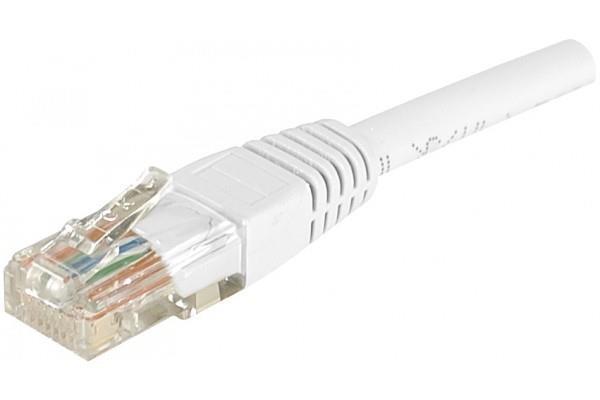
EXC Cat5e U/UTP Network Cable 0.15 m, White
EXC Cat5e U/UTP Network Cable – White Patch Cable, 0.15 m
This EXC Category 5e network cable is a short patch lead for connections between nearby devices such as a router, switch and network outlet. It uses an unshielded U/UTP construction and has a round white cable jacket.
Support for signal frequencies up to 100 MHz makes it suitable for standard home and office network connections over short distances, for example behind a switch or inside a patch cabinet.
Benefits
- Short 0.15 m patch cable for confined spaces behind a switch or router
- Category 5e with support for frequencies up to 100 MHz
- Individually packaged
- Round PVC jacket for good flexibility
Good to know
The cable is not compatible with Power over Ethernet applications. Its conductors are copper-clad aluminium, which has a slightly higher resistance than solid copper but is normally of little practical consequence over a length of only 0.15 m.
Technical specifications
| Product type | Cat5e U/UTP network patch cable |
| Brand | EXC |
| Model / part number | EXC853960 |
| Connections | RJ45 to RJ45 |
| Performance | 100 MHz frequency, 100-ohm impedance |
| Material | Copper-clad aluminium conductors, PVC jacket |
| Colour | White |
| Length | 0.15 m |
| Standards | ANSI/TIA-568-C.2 |
| Warranty | 2 years statutory warranty in Sweden |
Complete with
- Switch or router with an available RJ45 port
- Cable holders or ties for tidy routing inside a network cabinet
- A longer network cable when the distance exceeds 0.15 m
Why choose the EXC Cat5e Patch Cable
- Affordable solution for short connections in a network cabinet or behind equipment
- Meets the Cat5e standard for conventional network traffic
- Individually packaged and ready to use
PC & HiFi Örebro recommends
This short Cat5e cable is suitable for patching inside a network cabinet or connecting a nearby router and switch. For PoE devices such as IP cameras or access points, choose a cable that explicitly supports PoE, preferably Category 6 when additional capacity for future network speeds is required.